posted on Thursday, November 13, 2025 in Central Region News
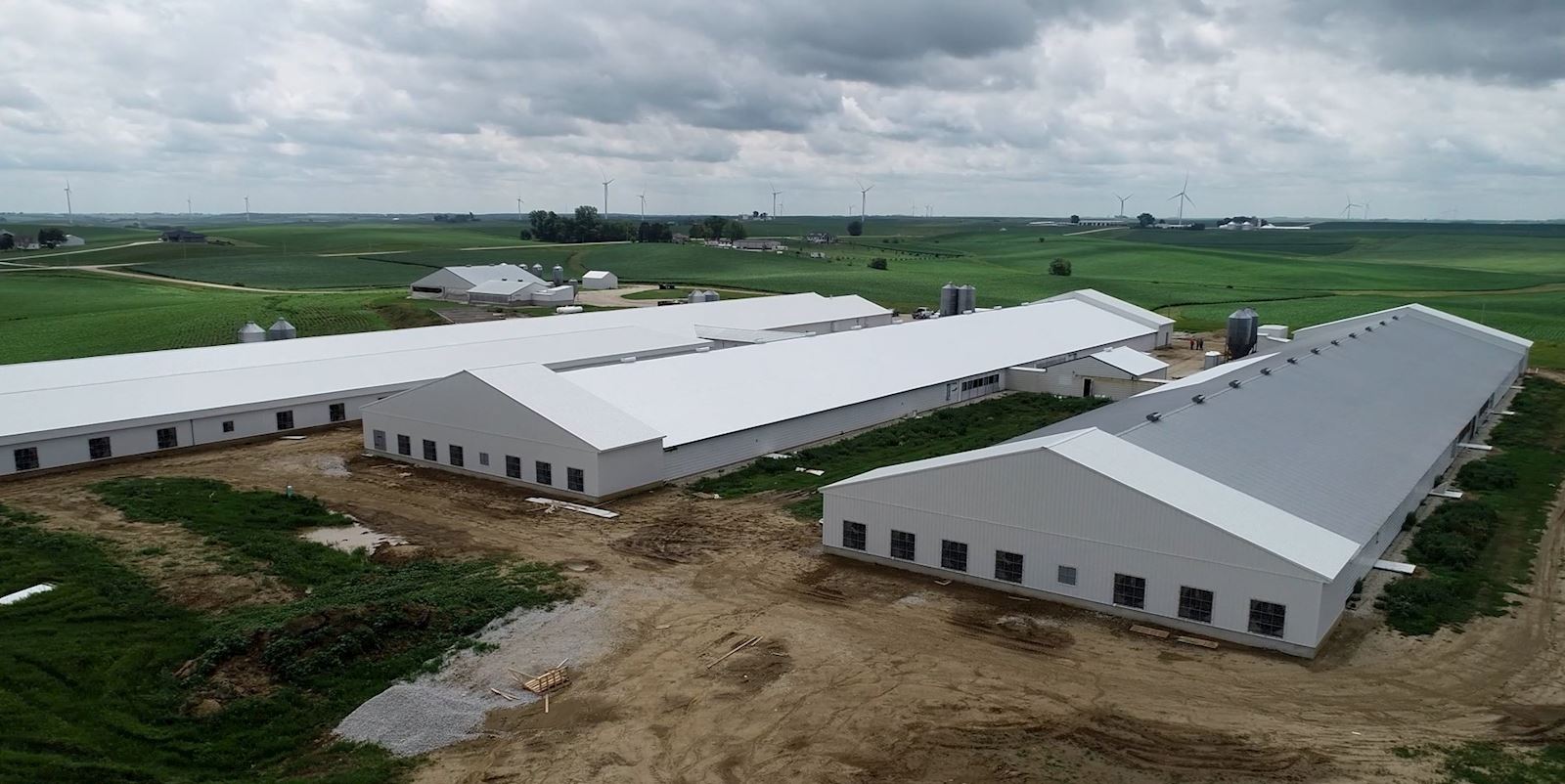
At AMVC, animal health is a top priority and a reflection of the company's commitment to "doing the right thing every day." One example of this commitment is the implementation of filtered barns, a biosecurity innovation designed to reduce the risk of airborne diseases like PRRS and PED in swine herds. In the Q&A below, Todd Rodibaugh, Director of Business Development, explains how filtered barns work, why they matter, and how this approach is helping AMVC lead the way in protecting herd health and supporting long-term sustainability across their managed operations.
Q: What is a "filtered" barn?
A: In simple terms, a filtered barn is a barn that has filters in its ventilation system to prevent airborne pathogens, like porcine reproductive and respiratory syndrome (PRRS) virus, from entering the barn and causing serious herd health issues for pigs.
Q: How is a “filtered” barn different from a typical barn?
A: All barns, regardless of production phase, need a good ventilation system to keep the air quality high for the animals. A filtered barn adds an extra step to the ventilation system for biosecurity purposes. Incoming air into the barn will be forced through a filter, or a series of filters, to “clean” the air of harmful particles. Oftentimes, the filters are very similar to those used in hospital operating rooms!
Q: What are the advantages of a filtered barn?
A: The main advantage of a filtered barn is the increased biosecurity level. Industry studies over the years have shown that filtered barns can reduce the incidence of PRRS breaks at a farm by 60-70%. Other diseases, such as Porcine Epidemic Diarrhea (PED) and influenza A virus, are also known to spread by air and can be reduced by filtration. Filtration systems can often be added to existing barns to upgrade their disease mitigation steps. This may be particularly helpful if a site has a poor health history and/or is in a pig-dense geographic area.
Q: Are there disadvantages?
A: Adding a filtration system to a barn is a significant investment for the owner, not only because of the upfront cost of the remodel, but also with the additional long-term expense of filter maintenance and replacement over time. In many cases, when a barn is retrofitted with a filtration system, other improvements must be made to ensure an effective filtration system is added, such as structural enhancements to prevent air leaks or the installation of additional or more powerful ventilation fans to help direct airflow through the filters.
It is important to remember that filtration does not eliminate the risk of disease. There is still a risk of airborne pathogens reaching the herd, as well as a continued risk in common high-traffic areas, including employee and supply entries, loading chutes, and transportation routes. Filtration is not a reason to relax on biosecurity practices!
Q: What type of barns are filters typically used on?
A: Filtered barns are most common on sites where high health is paramount, such as sow farms, multiplication sites, and boar studs. These are sites where a significant health issue like PRRS or PED can be devastating to the animal population, with a severe economic impact on the system. Filtration on grow-finish sites is less common due to the cost of implementation and the typically shorter periods that animals spend in these barns.
Q: Why are more producers/farm owners considering filtration?
A: PRRS and other diseases continue to impact the industry negatively, so anytime a biosecurity improvement is available, producers are going to give it serious consideration. A 2024 study by Iowa State determined that PRRS collectively costs the industry over $1 billion annually in lost production, demonstrating a large economic incentive to reduce PRRS breaks.
As research continues in disease mitigation and building design, the industry has become more effective at applying filtration systems to existing facilities in a cost-effective manner. Furthermore, the recent economic and regulatory environment has made it difficult to build new sites in isolated, high-health areas, prompting producers to strongly consider adding filtration to their current sites.
Q: Does AMVC have any filtered barns?
A: Yes, AGT and Colfax are filtered barns in our system. Roanoke recently transitioned to a filtered barn, and Welsh added filtration during the rebuild after the recent tornado. A strong commitment to biosecurity, including filtration, helps demonstrate to our clients that we’re committed to consistently producing healthy, robust pigs.
Q: Will all barns in AMVC’s system eventually become filtered?
A: Not likely. Not all barns require filtration. Some barns are located in isolated areas with a long history of high health standards. Others are older sites where a retrofit wouldn’t be practical. Some farm owners may decide the investment doesn’t make sense for their operation. These considerations, along with many others, inform significant operational decisions, such as filtration. Regardless of ownership’s decisions, our continued commitment to biosecurity and doing what is right every day will ultimately benefit the animals, our clients, and ourselves.